Niwa Daisuke seems like an ordinary teenager having troubles in his studies and romance until he learns he has an alter ego - and a powerful one.
Daisuke carries in his genes the ability to turn into Dark Mousy, a thief, and what made the situation worse was that he transforms whenever he sees his crush, Risa Harada. All the years of training he went through under the guidance of his mother and his grandfather finally made sense. Only the males in their family are gifted with the ability. At first he didn't like the idea of having someone else inside his body.
As he tries to cope with his alter-ego, he meets an interesting boy at school. Hiwatari Satoshi seems to have taken interest in him and it was already clear in the first few episodes that he was to be Daisuke's rival - or friend?
In the first few episodes, he gets to test the extent of his powers but most of the time, the story focused on Daisuke's relationships with family, friends, as well as his lovelife. It was not clear at first why Dark needed to steal artifacts, mostly artworks and why it's passed on in the family. It also became obvious at this point that Satoshi was the other half of Dark - Krad. But it seems Satoshi is manipulated by his father and Krad against his will. He was determined to stop the famous thief without using his alter-ego.
Later on, Daisuke finally meets his father after so many years. He also learned why his mother wanted him to do his best everytime he's on a mission as Dark.
In the last few episodes, Daisuke realized he was falling in love with Risa's twin, Riku. At this point in the story, a direct attempt at Daisuke's life was put into action.
Episode 25 finally explained why Dark needed to steal and seal the artworks he has stolen. Apparently, the artworks, made by Satoshi's ancestors contain harmful magic. One of these was used to try to kill Daisuke. With the help of friends and family and even Satoshi, Daisuke was saved - but at a price. Both Dark and Krad were sealed in the Black Wings.
Overall, the series wasn't bad, although it did not focus on the nature of Dark and Krad and the explanation came in much later. Except for having an alter-ego, Daisuke's life is something a lot of youngsters can relate to. It's light, funny and easy to understand. Anyone who's new to anime will like this.
I liked the songs they used in the series. The animation isn't one of the best but it's good enough. I'm giving this 26-episode series a 7 out of 10 rating.
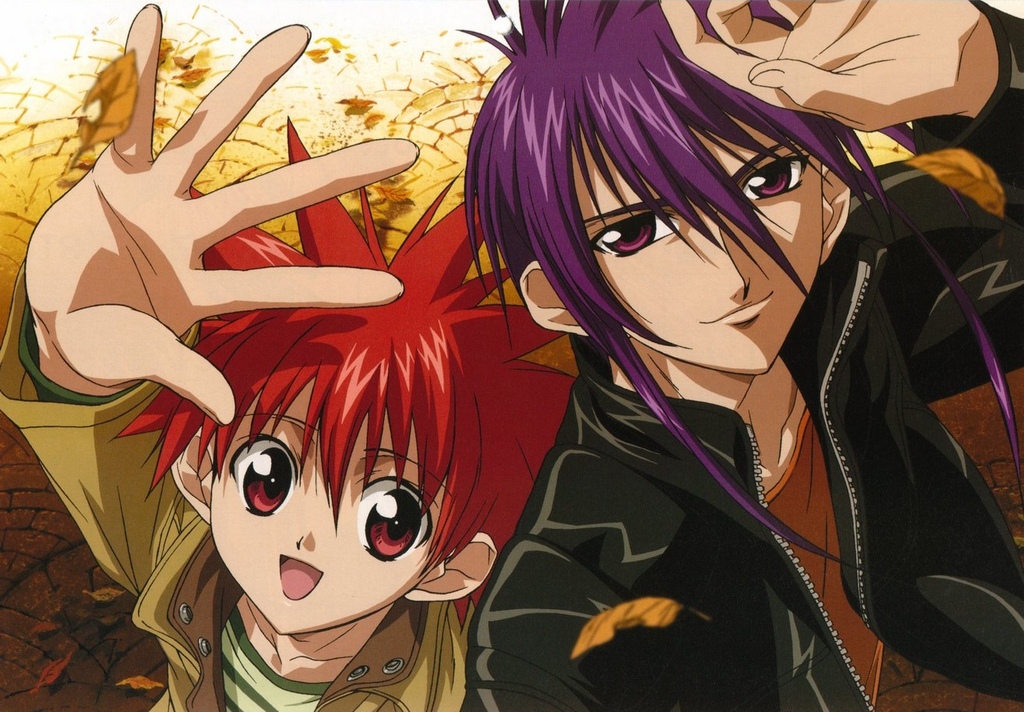 |
| Daisuke and Dark |
Daisuke carries in his genes the ability to turn into Dark Mousy, a thief, and what made the situation worse was that he transforms whenever he sees his crush, Risa Harada. All the years of training he went through under the guidance of his mother and his grandfather finally made sense. Only the males in their family are gifted with the ability. At first he didn't like the idea of having someone else inside his body.
As he tries to cope with his alter-ego, he meets an interesting boy at school. Hiwatari Satoshi seems to have taken interest in him and it was already clear in the first few episodes that he was to be Daisuke's rival - or friend?
In the first few episodes, he gets to test the extent of his powers but most of the time, the story focused on Daisuke's relationships with family, friends, as well as his lovelife. It was not clear at first why Dark needed to steal artifacts, mostly artworks and why it's passed on in the family. It also became obvious at this point that Satoshi was the other half of Dark - Krad. But it seems Satoshi is manipulated by his father and Krad against his will. He was determined to stop the famous thief without using his alter-ego.
 |
| Satoshi and Krad |
Later on, Daisuke finally meets his father after so many years. He also learned why his mother wanted him to do his best everytime he's on a mission as Dark.
In the last few episodes, Daisuke realized he was falling in love with Risa's twin, Riku. At this point in the story, a direct attempt at Daisuke's life was put into action.
Episode 25 finally explained why Dark needed to steal and seal the artworks he has stolen. Apparently, the artworks, made by Satoshi's ancestors contain harmful magic. One of these was used to try to kill Daisuke. With the help of friends and family and even Satoshi, Daisuke was saved - but at a price. Both Dark and Krad were sealed in the Black Wings.
Overall, the series wasn't bad, although it did not focus on the nature of Dark and Krad and the explanation came in much later. Except for having an alter-ego, Daisuke's life is something a lot of youngsters can relate to. It's light, funny and easy to understand. Anyone who's new to anime will like this.
I liked the songs they used in the series. The animation isn't one of the best but it's good enough. I'm giving this 26-episode series a 7 out of 10 rating.
Comments
Post a Comment
Comments are always welcome! Please keep it clean.